Lemon Curd Disappointment

me6

We learned some tough lessons at the Louisiana 3-Pot Cookoff!  Dispite lots of practice and careful preparation, our four-layer lemon curd cake with white chocolate buttercream flopped.  The lemon curd was a complete failure.
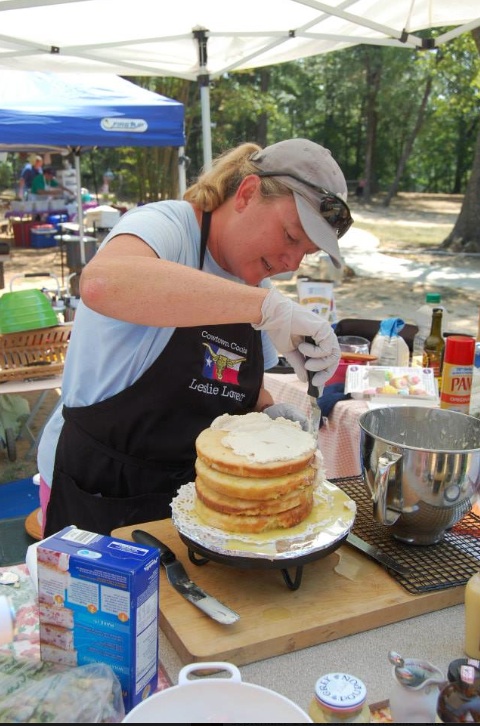
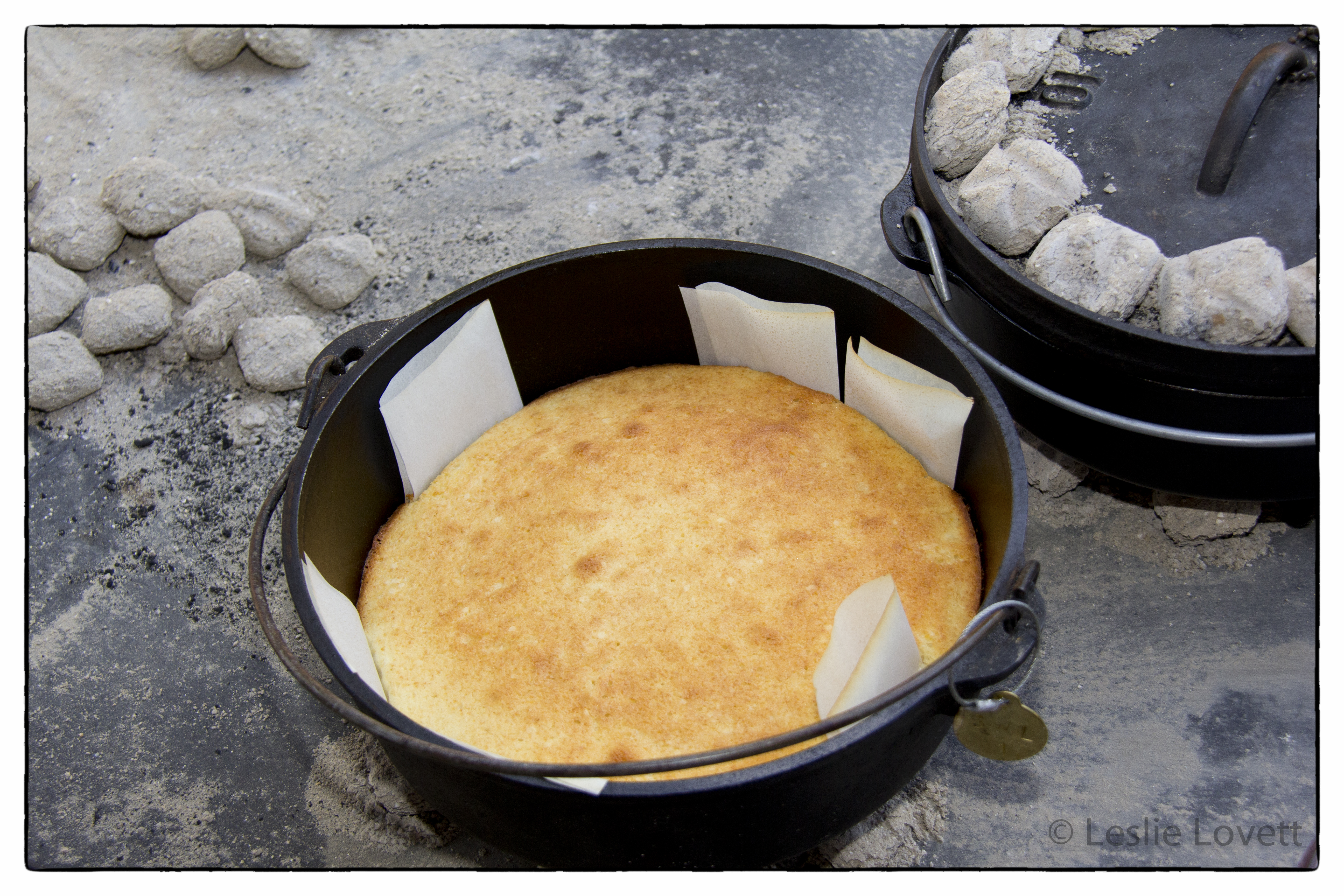
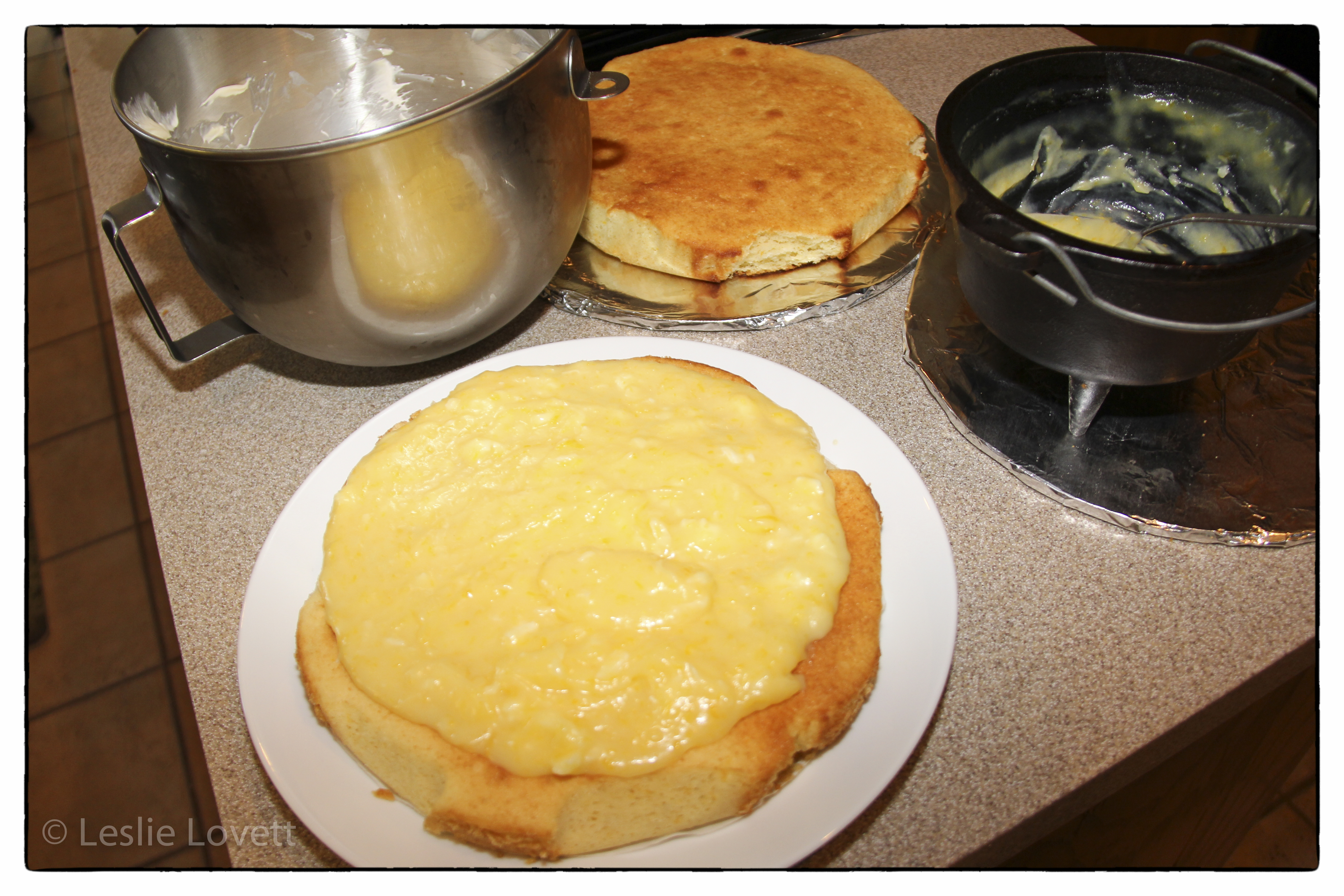
me11The cakes baked up beautifully!  I adjusted the recipe to increase the volume by 25% and divided the batter into four eight-inch camp Dutch ovens.  Each cake was level and the same size, so that wasn’t a problem.  After we removed the charcoal and let the Dutch ovens cool off, the cakes came out easily – no need for the parchment lifters at all.

Same for the frosting – whipped up perfectly, despite the heat.  The egg whites easily came to 140 degrees Farenheit in our improvised camp Dutch oven double boiler and then whipped up into a light, fluffy frosting with the white chocolate.  We put the frosting in a cooler with ice and it was perfect when it came time to frost the cake.  Two of the three complicated steps went just as planned.
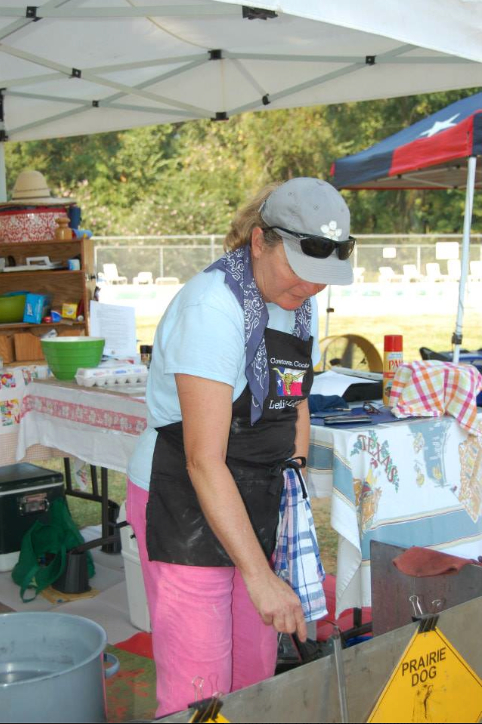
me1The lemon curd was a disaster.  Runny and thin, not thick and creamy.  Clear, not yellow. It was so sad!  We tried twice but both batches failed.  Frustrated is too tame of a word to describe my dissapointment.  When I put it on the cake, it ran out all over the side and bottom of the cake.  Useless!!

In our practice rounds, the curd thickened up beautifully, in just a few minutes, making a creamy and luscious lemon powerhouse of flavor.  But not at Chemin-A-Haut!  The curd would not set up!  I don’t really know why it flopped but my best guess is that the heat (over 100 Farenheit) and humidity must have been part of the problem.  The ambient temperature is the only difference I can think of when comparing the practice runs and the cookoff.
me

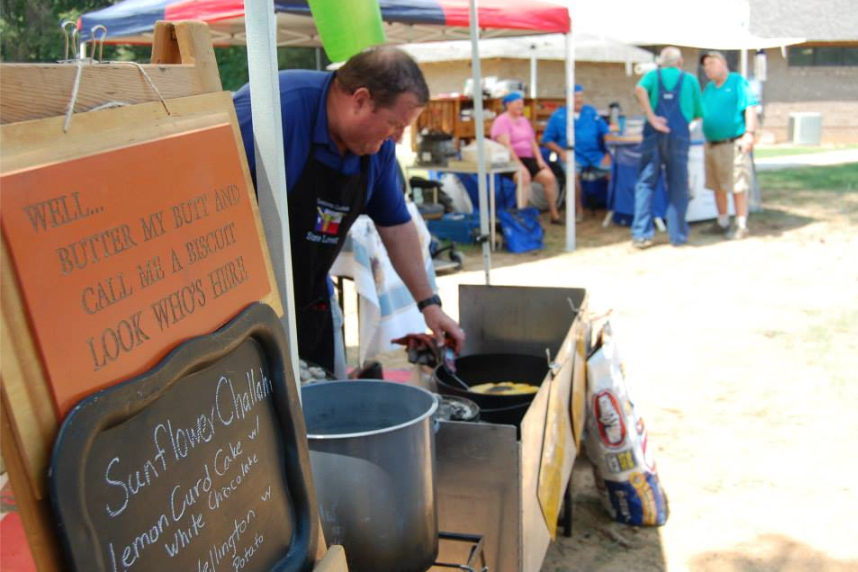
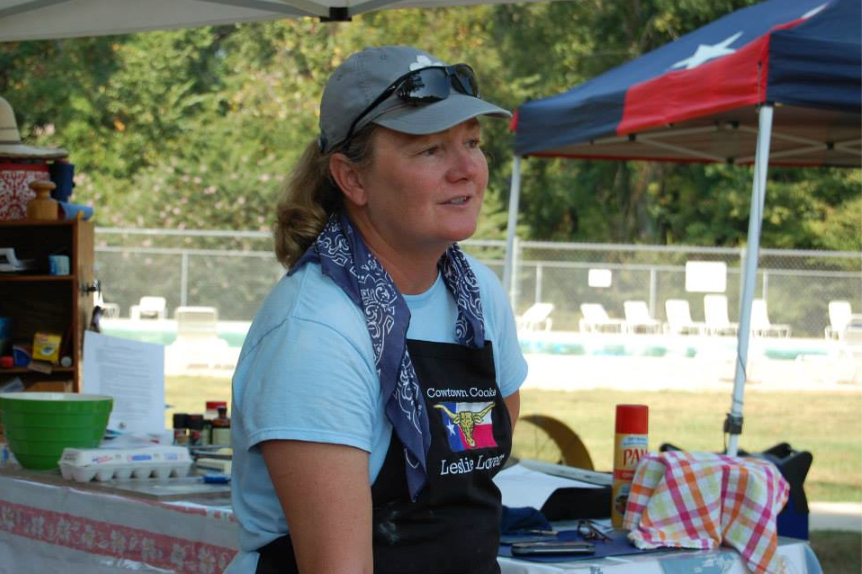
The heat and humidity were brutal!  The six teams competing had to endure extremely difficult environmental challenges.  We drank an entire case of water, poured ice water over our heads, pressed ice-packed bandanas around our necks, and somehow found the strength to soldier on through the four and a half hours of cooking. I nearly collapsed in the air conditioned cabin when the cookoff ended.
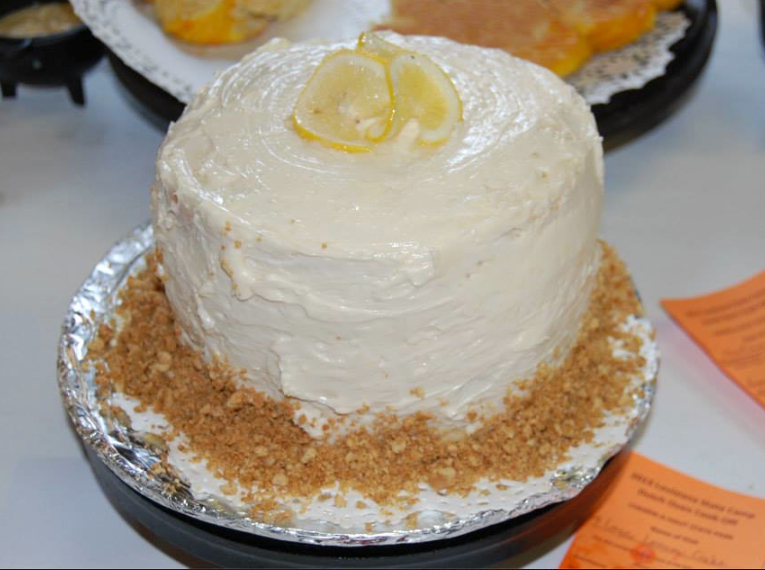
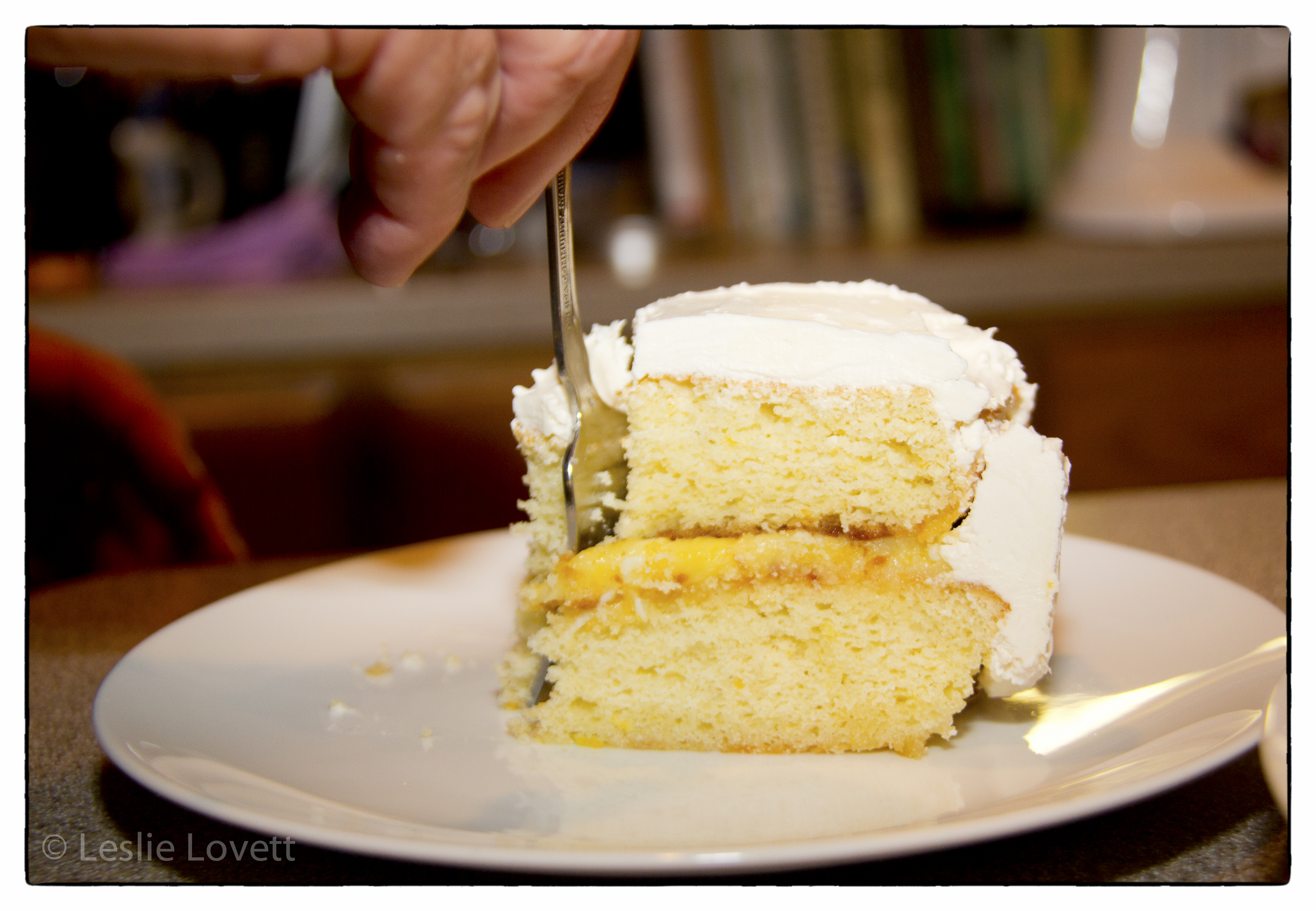
lemoncakeIt was a beautiful cake, but without the lemony curd in the three layers, the flavor was less than impressive and it was a bit dry.  The lemon curd  was critical to the overall success of the cake so without it, the cake flopped.

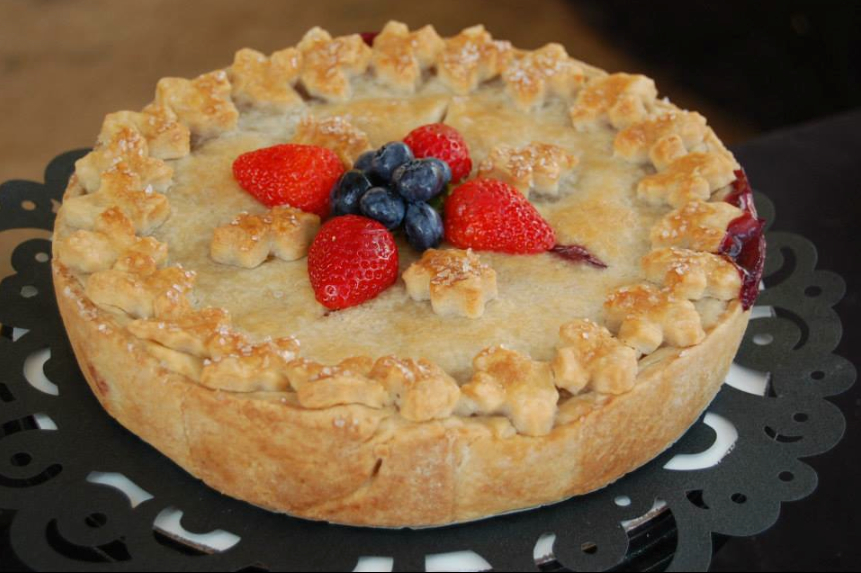
Our bread and main dishes both won first place, but because the cake flopped, we ended up second place over all.  Here is the winning dessert, a goregous Fruit of the Forrest pie, baked by our friends Bill Ryan and Terry Cobb.
me12

The main lesson I learned is to be prepared for flops, especially when tackling complex and challenging recipes.  This is especially true for baking because baking requires perfection where other cooking tasks are more forgiving.  Being prepared for failure requires inner emotional strength to perservere and not give up.  In the middle of the cookoff, I felt like quitting.  It was so hot and I was so disappointed, I would have quit but my better-half kept me going.  He knew how frustrated I was but he also knew we could make it.

Difficult lessons learned indeed but useful for future cookoffs!
Posted in Cooking in Competition | Tagged , , , , , , | Leave a comment

Lemon Curd Cake with White Chocolate Buttercream Frosting

My better half and I were preparing for the 2013 Louisiana Dutch Oven Cook Off in Chemin-A-Haut, Labor Day Weekend.  Selecting recipes for the three pots (bread, main, dessert) is always a challenge for lots of different reasons (a great topic for a future post!).  We knew what to make for our main dish and bread, but were not certain which recipe to prepare for dessert.  Bake a pie?  Or a cake?  Or a cheesecake?  So many choices!  Then I spotted this beautiful cake in Saveur America’s Heartland issue #158 (page 74) and had to try it out!

LemonCake

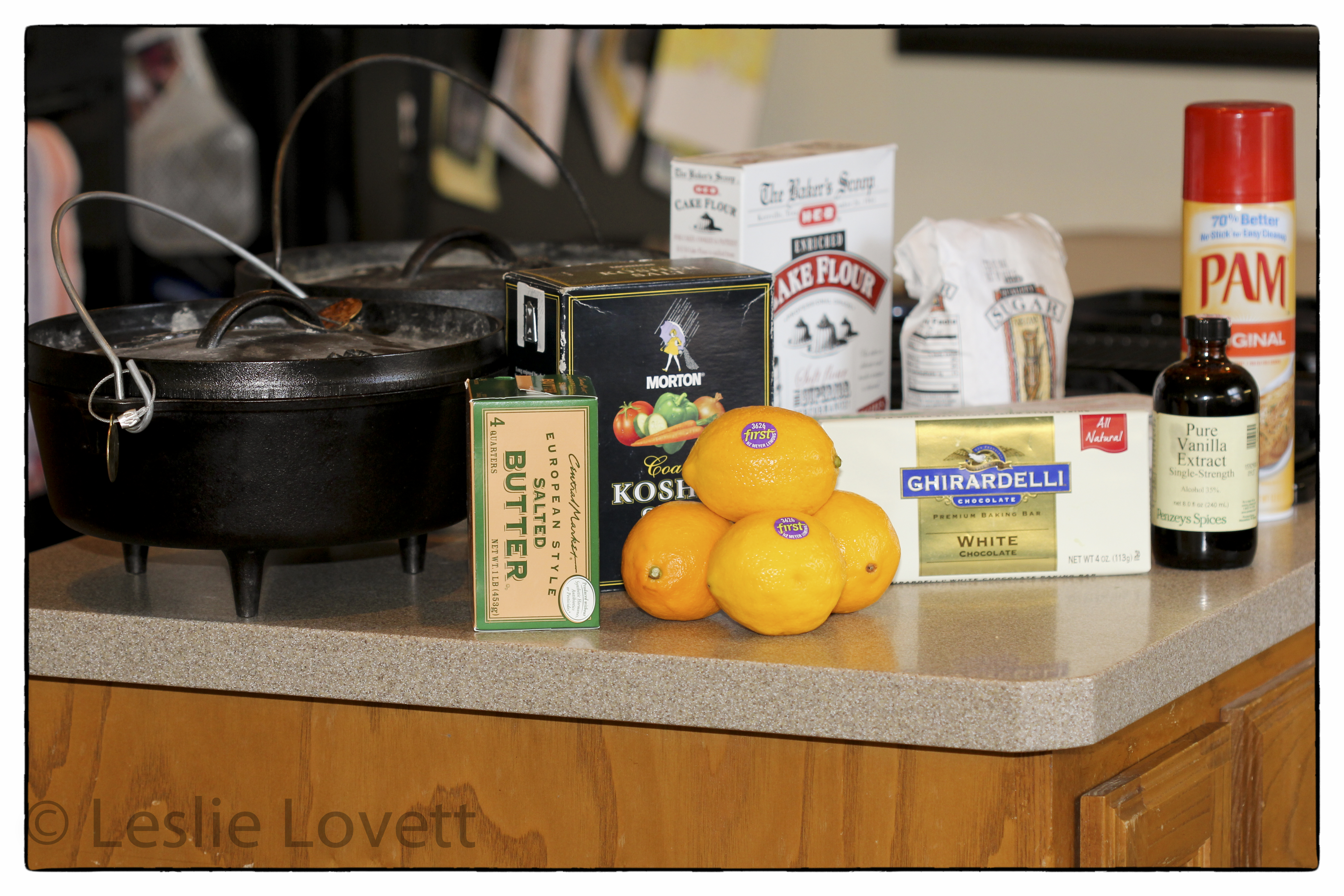
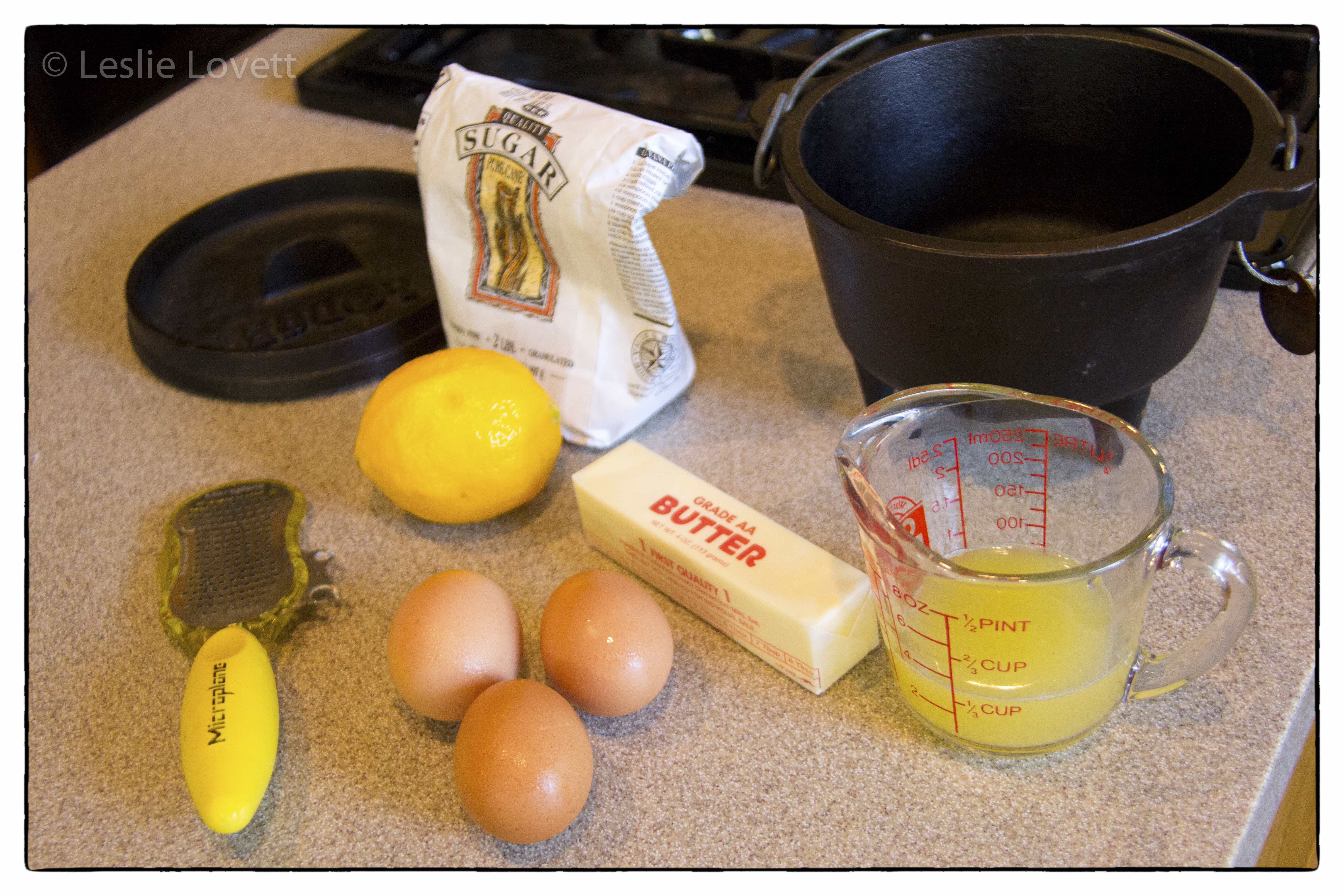
The goal of this experiment was to decide if we could complete all of the steps within the time limit of the cook off.  We gathered up all the ingredients, collected our Dutch ovens,  and started the clock!

GatherIngredients-Edit-1

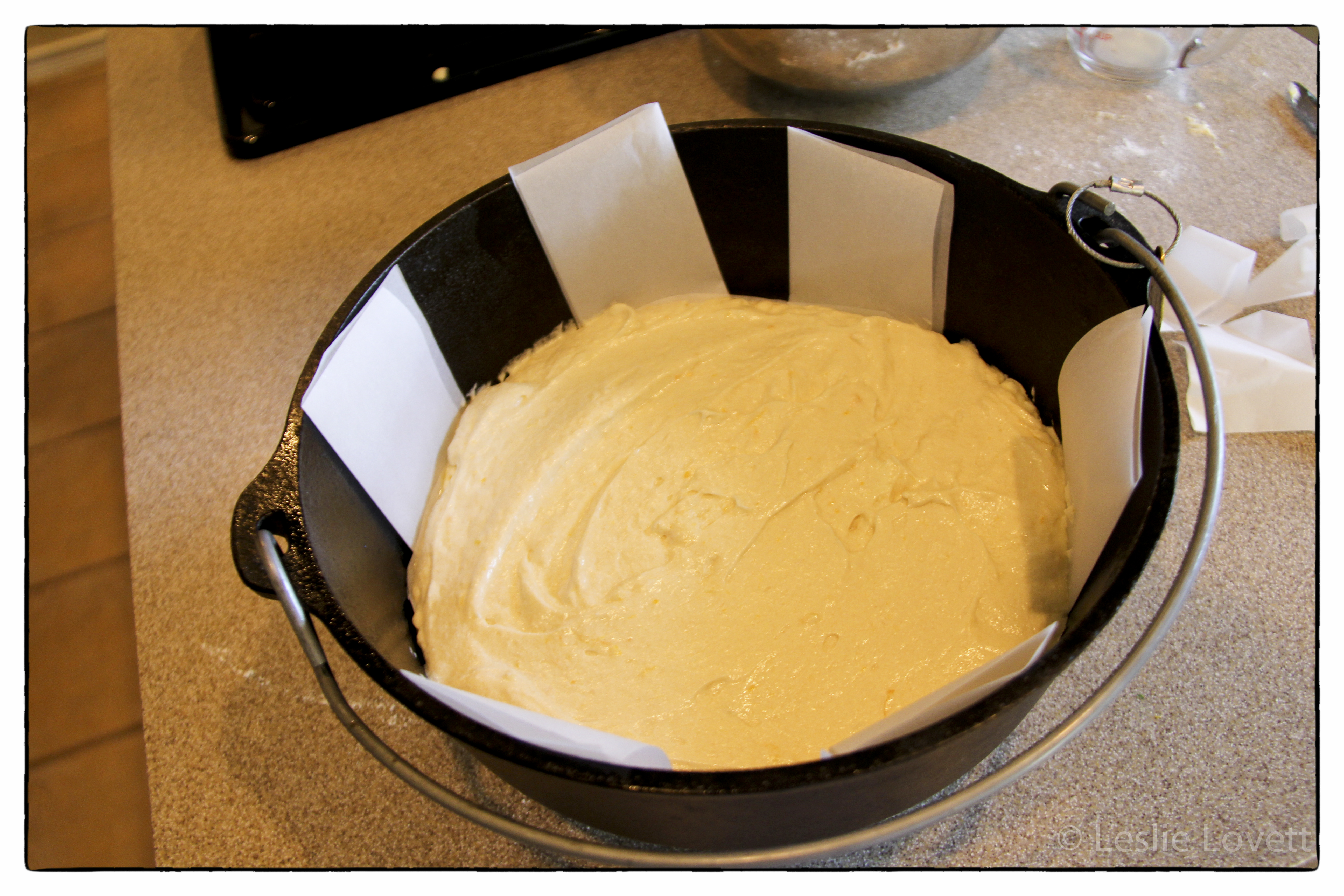
For this experiment, we used two 10-inch camp Dutch ovens since the recipe called for two 9-inch round baking pans (the bottom of a 10-inch camp Dutch oven is about 9-inches in diameter).  We prepared the Dutch ovens by lining them with parchment and adding three parchment lifters.

This one-minute video shows how to make the parchment liner to fit inside the bottom of any Dutch oven (or baking pan!).

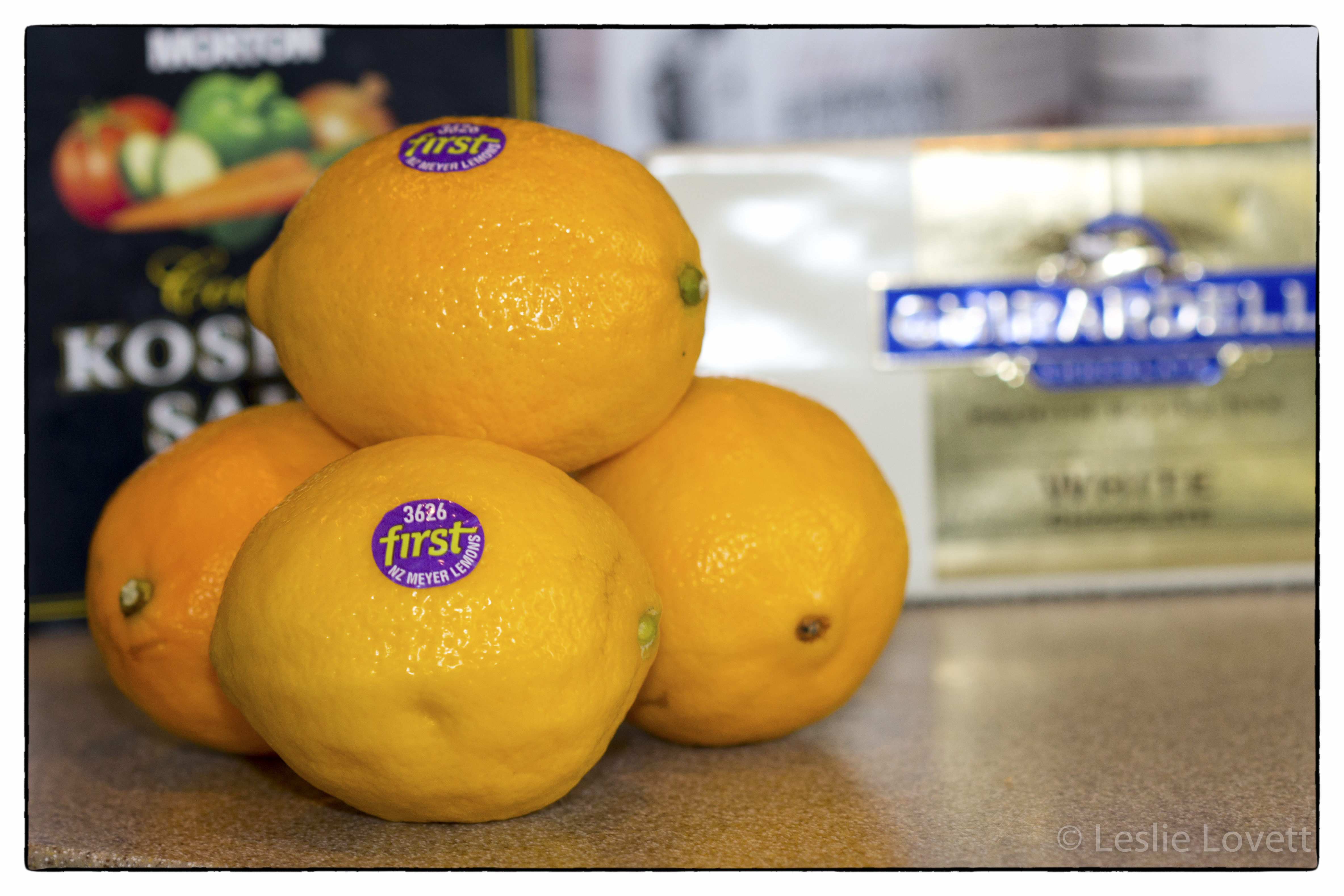
To make sure the cake and curd were super yummy, I used Meyer lemons, a lovely, subtle, sweet, and not-so-acidic lemon.  Emma Christensen‘s description on theKitchn is perfect:

Meyers get their signature sweetness from a bit of mandarin orange in their family tree. This is also what gives Meyer lemons their deep golden color, roundness, and smooth rind. Despite being sweeter, you still won’t want to eat a Meyer lemon whole. They’re sour but they lack the eye-tingling wallop of acid that regular lemons have. On the whole, Meyers are more subtle, perfumed, and aromatic.

IMG_9514-Edit-Edit-1-2

We mixed up the lemon cake mix and poured it into the two 10-inch Dutch ovens, lined with parchment and lifters.

ReadyToBake-Edit-1

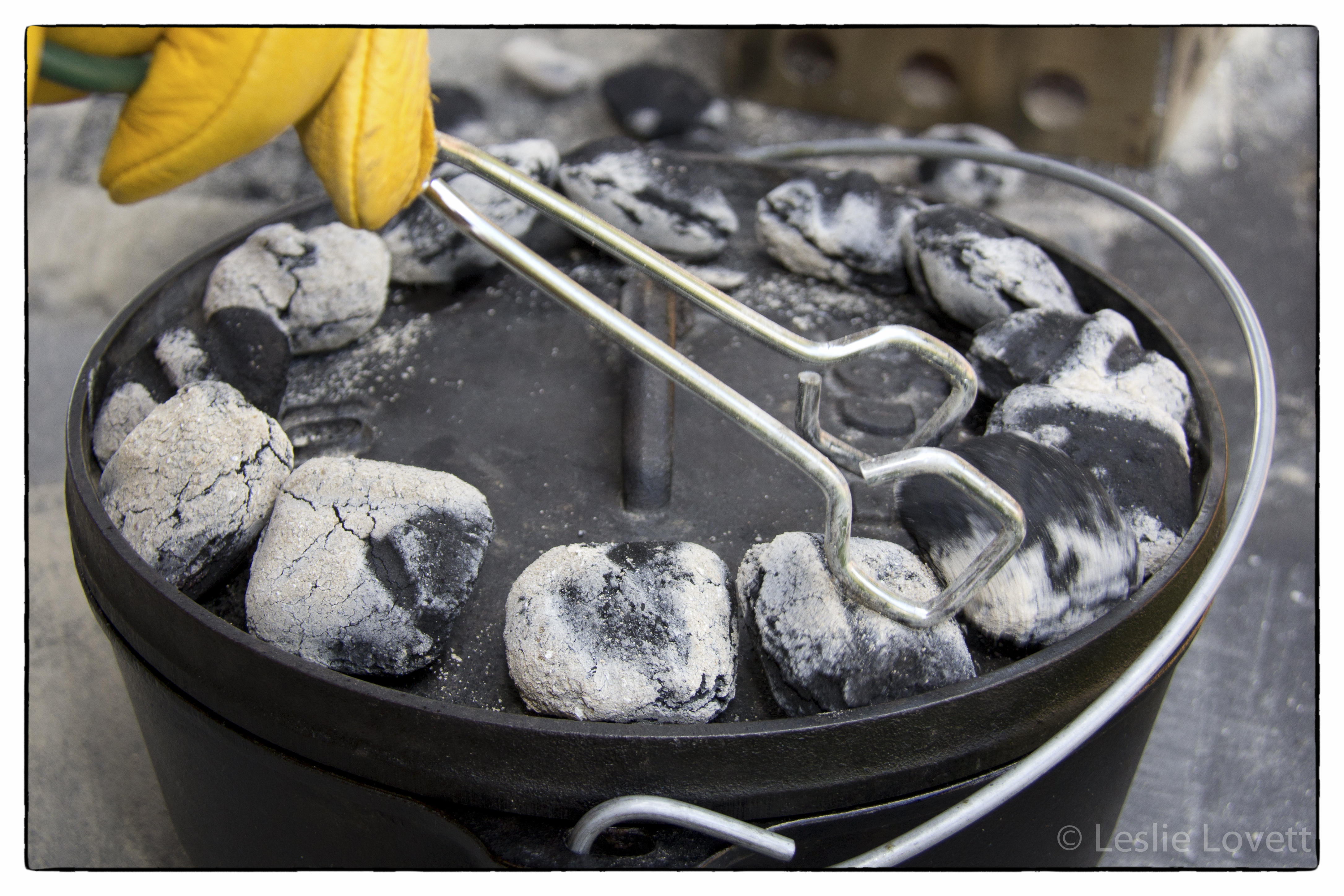
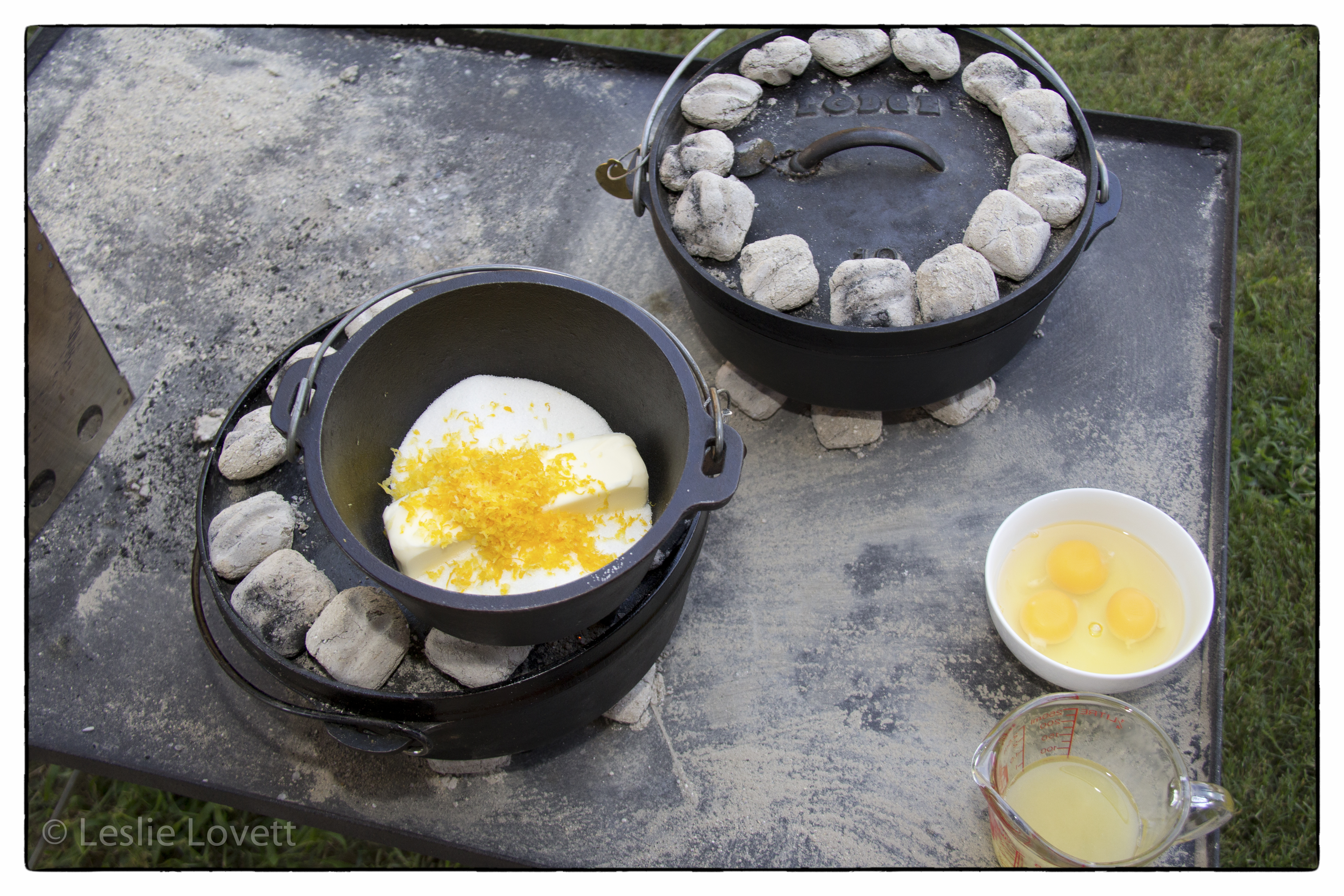
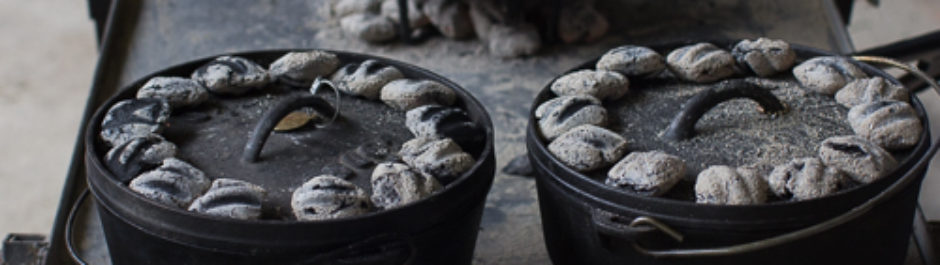
To bake it at 350-degrees Farenheit, we placed 13 hot charcoal briquettes on the top and 7 on the bottom (following the “3 Up – 3 Down” guideline).  After 10 minutes, we rotated the lid counter-clockwise and the Dutch oven clockwise to avoid a hot spot (burning cake is never a good thing!).

IMG_9563-Edit-1

After another 10 minutes, we could smell the lemony aroma of the baking cakes!  Devine! We knew they were almost done so we started peaking to check the color, looking for the gold brown on top, and then inserting a clean toothpick to confirm they were done.

IMG_9587-Edit-1

When the cakes were done, we removed all of the charcoals and let them sit at room temperature until it was safe to put them into a cooler with ice and then remove them from the pots.

IMG_9578-Edit-1

Making the curd wasn’t as difficult as I expected.  Curd and custard are similar in that they are both smooth and creamy, but they are different in the method they are prepared.  Curd does not use any thickening agent, like cornstarch, and is prepared over a simmering hot water bath, normally in a double-boiler.  I skipped the water bath and was successful in whisking the curd smooth and thick over a few charcoal briquettes.  IMG_9581-Edit-1

IMG_9586-Edit-1

The hardest part of this recipe was making the white chocolate buttercream frosting since it required bringing the egg whites to 140 degrees Farenheit (got to kill those bad bugs!) but not cooking them into a solid state.  Thankfully, the double-boiler worked well and they quickly came to temperature (about five minutes).

IMG_9591-Edit-1

I whipped the warm egg whites up, added the rest of the ingredients, and put the frosting in the cooler to chill.  This recipe for frosting is incredibly light and fluffy and not too sweet.

IMG_9596-Edit-1

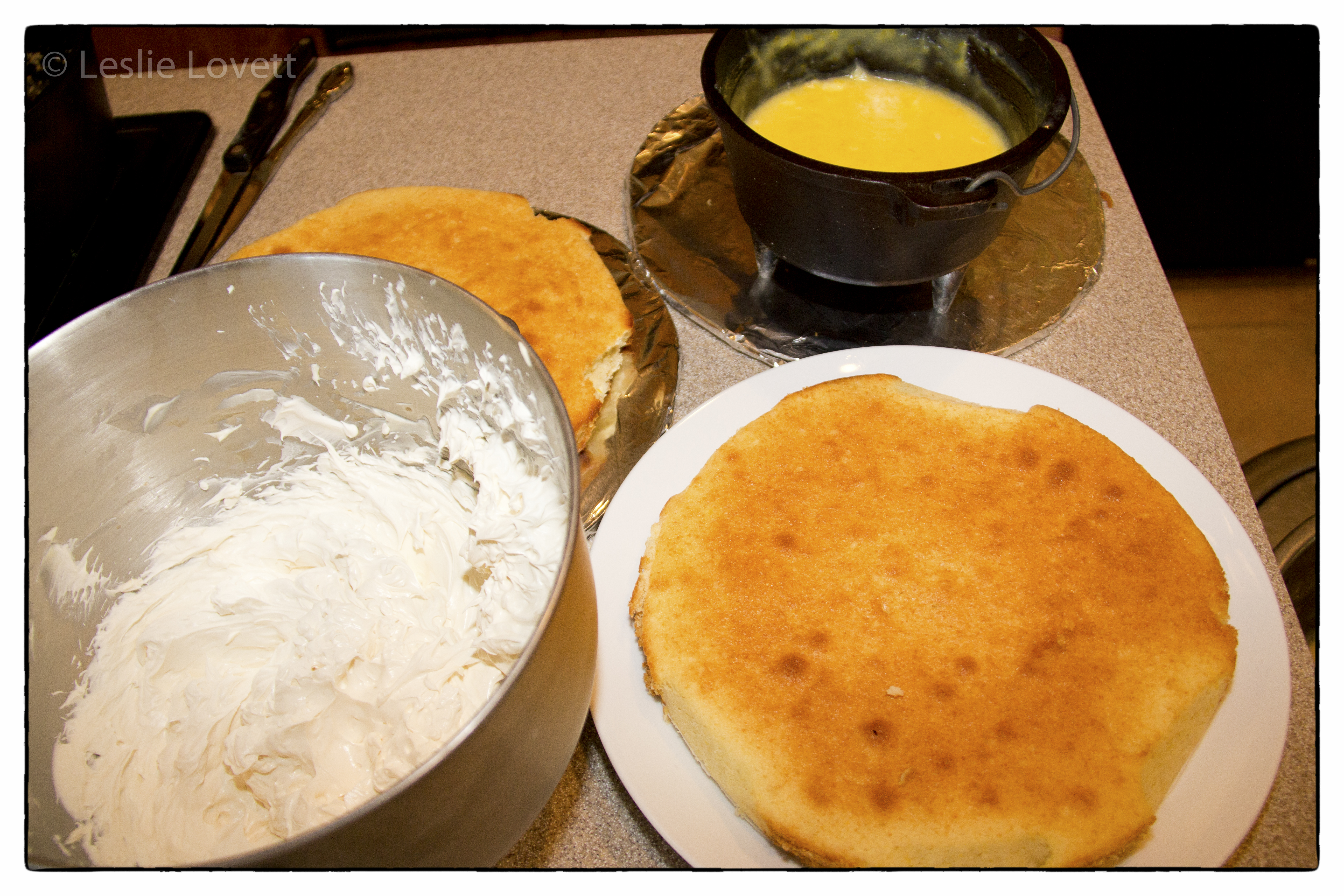
We were finally ready to put it all together, well within the time limits of the cook off.  I was not pleased with the funky indentations made by the parchment lifters.  Thankfully, they were hidden by the white chocolate buttercream frosting, but this taught me a lesson:  parchment lifters are not necessary for cakes.  Once the cakes were cool, they popped out of the Dutch oven without any trouble, making the lifters unnecessary and they prevented a nice round cake.  Lesson learned!

CurdInMiddle-Edit-1

The lemon curd set up so nicely!

IMG_9614-Edit-1

This is a fabulously lemony and yummy cake!  The crumbly texture of the cake followed by the creamy lemon curd is a wonderful combination.  The buttercream frosting holds it all together and is light, fluffy, and not too sweet.  We ate one slice, and then another, and had to make ourselves stop so that my sweetie could take it to the office in the morning.  Oh, it is good!!

Our experiment was successful.  We kept track of the time it took to bake this cake and decided we could bake it, assemble it, and let it chill in the cooler and get it to the judges table on time.

This has been the most complex baking task we have faced in our outdoor kitchen.  There are multiple steps involved and therefore a higher risk of failure, especially baking in Dutch ovens with charcoal.   In my next post, I’ll tell you how we did at the cook off!

Posted in Cooking in Competition | Tagged , , , , , | 1 Comment